Nose vs. Mouth Snoring: Key Differences & How to Stop
[Image Prompt: Banner Image]
-
Position: Top of the article.
-
Type: Scene Image.
-
Core Content: A person sleeping peacefully in a warm, dimly lit bedroom. The composition is at eye level, with space on one side for the title. The background bookshelf is slightly messy to add a "lived-in" and authentic feel.
-
Lighting: Soft natural light coming through a window, creating a calm and comfortable atmosphere.
-
Style: Modern photography with subtle film grain for a professional yet non-staged look.

If you’ve ever woken up feeling like a zombie, or had a partner nudge you awake in the middle of the night, you know snoring is a nightmare. It’s frustrating, embarrassing, and honestly, exhausting.
But here’s something you might not know: chronic snoring is more than just a sound. It’s a sign of "sleep debt" that can actually age your brain by two years.
According to the Cleveland Clinic, snoring happens when air can't flow easily through your nose or throat. When this path is blocked, the tissues in your airway vibrate, creating that familiar (and loud) rumble.
The secret to stopping it isn't a random gadget; it’s figuring out exactly where the blockage is happening.
[Video Supplement]: What is Snoring? Watch the breakdown here: https://www.cnn.com/videos/health/2023/01/23/what-is-snoring-lbb-orig.cnn
The "Cheat Sheet" for Better Sleep
Don't have time for the full guide? Here is the bottom line:
-
Snoring isn't one-size-fits-all. There are 5 levels of obstruction in your airway, from your nose down to your throat.
-
Mouth snoring usually sounds like deep rumbling and leaves you with a dry, sticky mouth in the morning.
-
Nose snoring often sounds like high-pitched whistling or clicking and usually happens during hay fever or colds.
-
The Golden Rule: You must identify your snoring type before buying any anti-snoring tools. Most gadgets only work for one specific type.
The 5 Levels of Obstruction: Where is the Blockage?
[Image Prompt: Infographic]
-
Position: Mid-section, under the "5 Levels" heading.
-
Type: Infographic (Comparison Image).
-
Core Content: A clear, anatomical side-view of a human head and neck. Use numbered markers (1-5) to show each obstruction point from the nose down to the throat. Each marker should have a short, simple label.
-
Lighting & Atmosphere: Clean, medical-style lighting. Use a professional blue and white color palette to convey authority and clarity.
-
Style: Modern flat-design infographic.
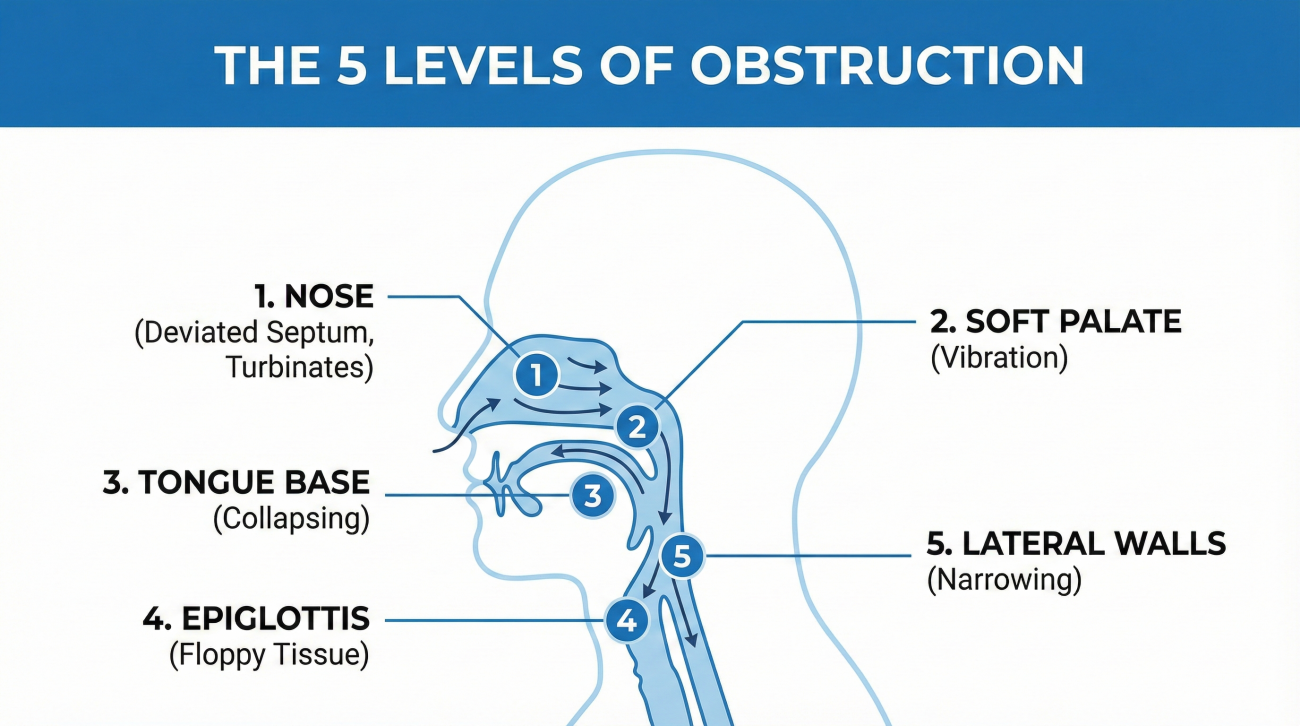
Most people think snoring is just a "throat thing." In reality, it is a structural problem that can happen at any point along your airway. Think of your airway like a series of pipes. If any part of the pipe narrows, the air has to move faster, which causes the tissues to flap and vibrate.
According to the specialists at Breathe Freely, there are five specific levels where this happens:
-
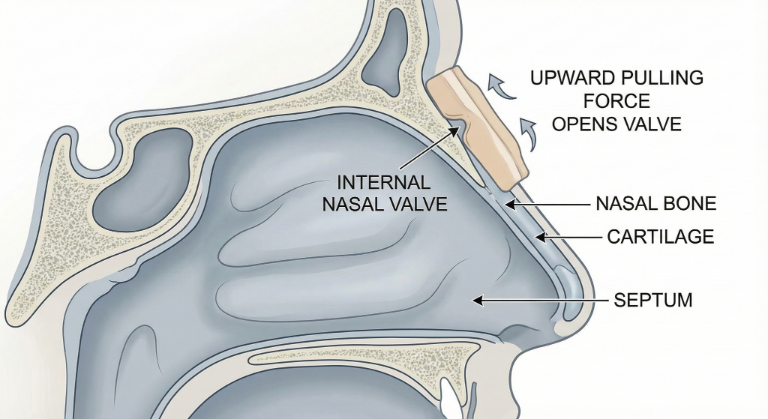
Level 1: The Nose. This is often caused by a deviated septum or swollen tissues (turbinates). If your nose is blocked, it creates a "vacuum effect" that pulls on the tissues further down your throat.
-
Level 2: The Soft Palate. This is the most common spot. It involves the roof of your mouth and the uvula (the little dangling thing in the back). When these tissues are too loose, they vibrate as you breathe.
-
Level 3: The Tongue Base. When you fall into a deep sleep, gravity can pull your tongue backward. This narrows the space in your throat and creates a deep, heavy snoring sound.
-
Level 4: The Epiglottis. This is the "lid" that covers your windpipe when you swallow. Sometimes, this tissue gets floppy and vibrates during sleep.
-
Level 5: The Lateral Walls. This happens when the sides of your throat collapse inward. This is often linked to more serious issues like sleep apnea.
The key to a quiet night is identifying which of these "pipes" is the problem. Using a nose strip won't help if your issue is at Level 3 (the tongue).
[Video Supplement]: Watch how these obstructions happen in real-time: https://www.youtube.com/watch?v=0ONJEEQYVwc
Nose vs. Mouth Snoring: Spot the Difference
To stop snoring, you first need to know where the noise starts. Most people fall into two camps: those who snore through their nose and those who snore through their mouth.
The easiest way to tell the difference is by how you feel when you wake up. Do you have a headache and a stuffed-up nose? Or is your mouth so dry it feels like you swallowed sand?
Here is a quick breakdown to help you spot the difference:
| Feature | Nose Snoring | Mouth Snoring |
|---|---|---|
| The Sound | High-pitched whistling or clicking. | Deep, heavy rumbling or grunting. |
| Morning Feel | Stuffy nose or "heavy" head. | Very dry, sticky mouth and sore throat. |
| Common Trigger | Allergies, colds, or a bent nose bone. | Sleeping on your back or a weak jaw. |
The "Dehydration Cycle" of Mouth Snoring
If you are a mouth snorer, you are likely stuck in a "Dehydration Cycle." When you breathe through your mouth all night, the air dries out the tissues in your throat. These dry tissues become stickier and more prone to vibrating against each other. This creates a louder noise, which leads to even more mouth breathing. It is a frustrating loop that leaves you exhausted.
The Hidden Benefit of Nasal Breathing
On the other hand, breathing through your nose is a superpower for your health. According to experts at MyoTape, nasal breathing helps your body produce Nitric Oxide. This is a gas that helps your blood vessels expand, allowing your lungs to absorb more oxygen.
When you snore through your nose, it is often a sign that your "air filter" is clogged. Fixing this doesn't just stop the noise—it actually helps your body recover better while you sleep.
3 Steps to Find Your Snoring Type
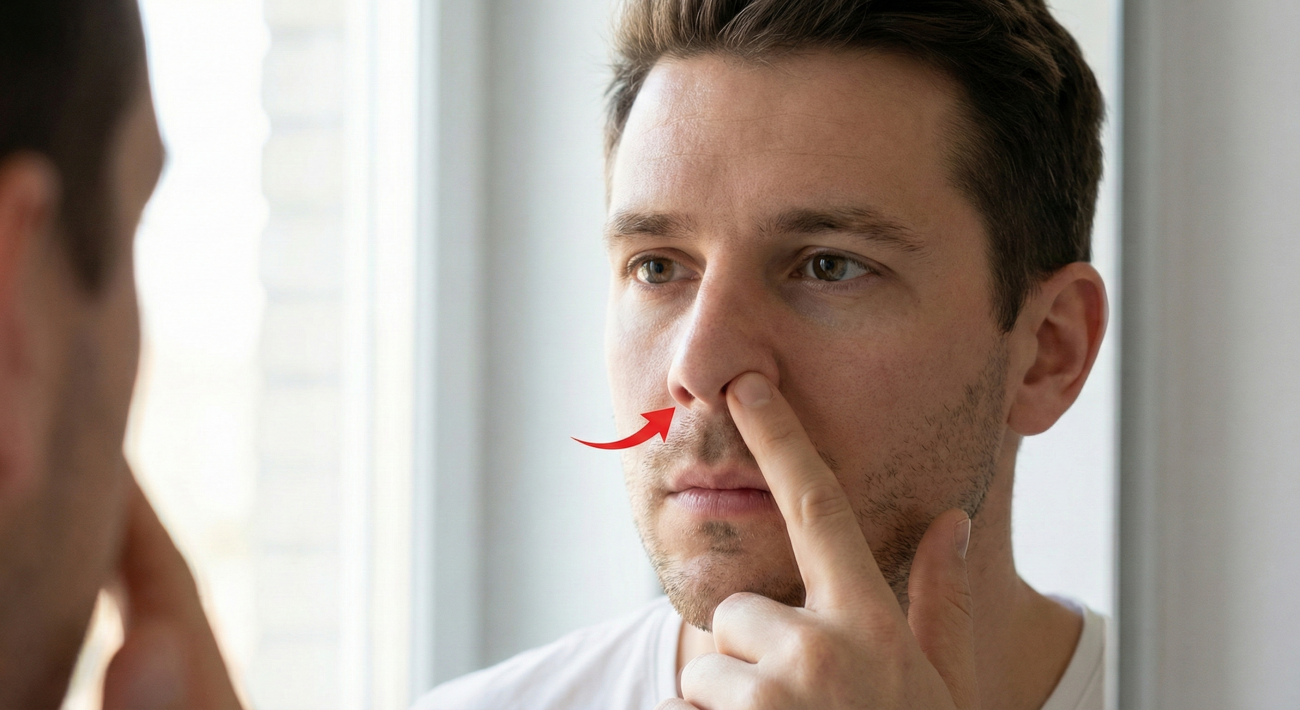
You don't need a lab to start finding answers. You can do these three simple tests right now to help pinpoint which of the 5 levels is causing your snoring.
Test 1: The "Mouth Open" Test
Open your mouth and try to make a snoring sound. Now, close your mouth and try to make the same sound. If you can only snore with your mouth open, you are likely a Mouth Snorer. This usually means the issue is at Level 2 (your soft palate).
Test 2: The Nose Collapse Test
Stand in front of a mirror. Press one nostril closed with your finger and breathe in deeply with your mouth shut. If your other nostril collapses or "sucks in," you have a structural issue at Level 1. This means your nose isn't letting enough air through, creating a vacuum that causes snoring.
Test 3: The Tongue Test
Stick your tongue out as far as it can go and grip it gently between your teeth. Now, try to make a snoring noise. If the sound is quieter or gone, your tongue is the culprit (Level 3). This happens because sticking your tongue forward opens up the back of your throat.
Identifying your type is the most important step. It saves you money because you won't buy a chin strap if your problem is actually in your nose.
[Video Supplement]: Watch Dr. Mark Burhenne demonstrate these tests: https://www.youtube.com/watch?v=ethsfyPX1R4
Why "Just Living With It" is Dangerous
Snoring is often treated as a joke, but for your body, it is a serious struggle. If you ignore the noise, you aren't just losing sleep—you are risking your long-term health.
First, let's talk about your brain. Chronic snoring and the "sleep debt" it creates can actually age your brain by two years. This happens because your brain never gets the deep, restorative rest it needs to stay sharp.
There is also a hidden risk for your heart. The constant vibrations from loud snoring can cause your carotid arteries to become inflamed and thick. Over time, this significantly increases your risk of a stroke.
If you are a mouth snorer, the risks are even more visible. Long-term mouth breathing can actually change your face shape—a condition often called "adenoid face". It can lead to a recessed jaw and a longer facial structure. It also dries out your mouth, which leads to more tooth decay and bad breath.
Finally, watch out for the "Awake Snore." If you notice you make a snoring sound while you are sitting up or just relaxing on the couch, this is a major red flag for Sleep Apnea.
According to the American Medical Association (AMA), identifying these risks early is the best way to prevent permanent damage. You can also find more details on these complications at the Mayo Clinic.
Science-Backed Solutions for Every Level
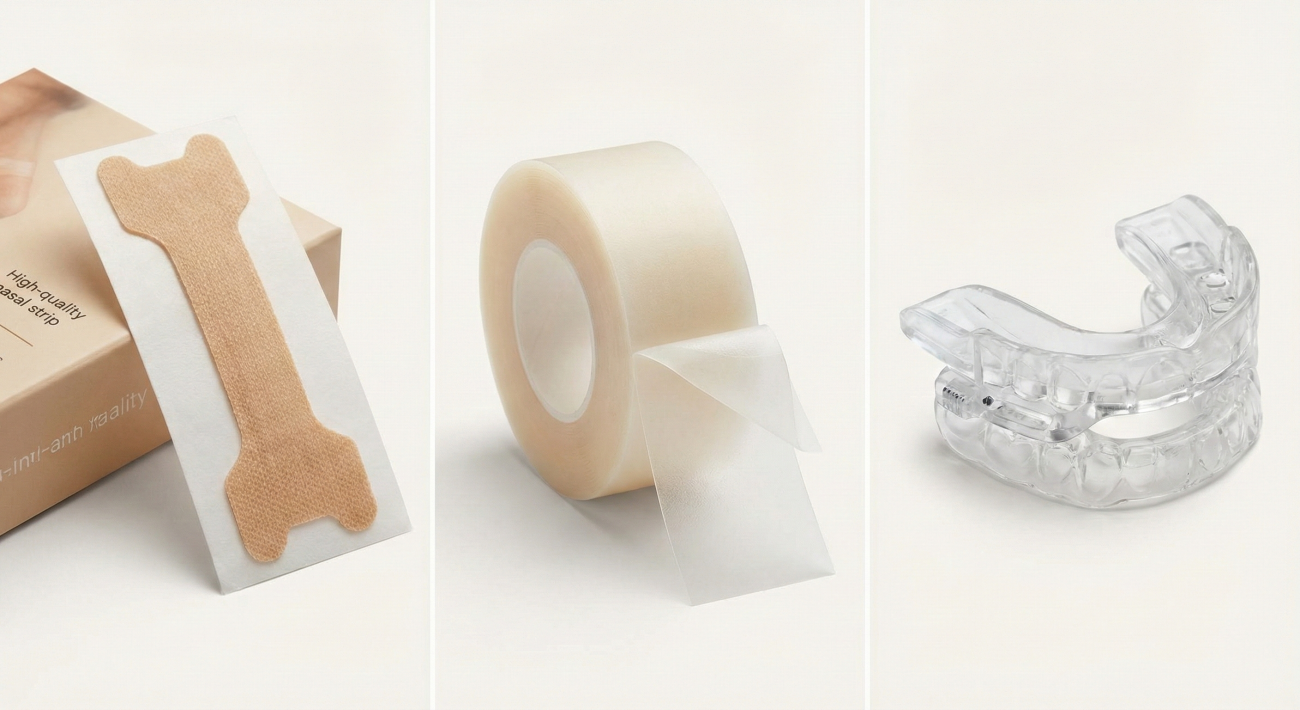
Now that you have identified your snoring type, you can stop guessing and start fixing the problem. Think of these solutions as a toolkit. You don’t need every tool—you only need the one that fits your specific level of obstruction.
For Level 1: Clearing the Nose
If you failed the "Nose Collapse Test," your goal is to open up the nasal passage.
-
Nasal Strips or Dilators: These work by manually pulling the nostrils open. They are perfect if you have a deviated septum or narrow nasal valves.
-
Saline Rinses: If your nose is blocked by allergies or mucus, a saline rinse can clear the path.
-
Medical Intervention: For chronic issues, an ENT specialist might suggest "Balloon Sinuplasty," which is a quick procedure to expand the sinus path. See more on sinus-related snoring at Maryland ENT.
For Level 2: Controlling Mouth Breathing
Mouth snoring is often about the soft palate vibrating. The most effective way to stop this is to switch back to nasal breathing.
-
Mouth Taping: This involves placing a small piece of specialized tape over your lips to keep them closed.
-
The Safety Rule: Never fully seal your mouth if you have a cold. Always leave a "safety fold" at one corner so you can peel the tape off instantly.
-
Chin Straps: These help keep your jaw closed during sleep, which can be a good alternative if tape feels too restrictive.
For Level 3 & 4: Supporting the Tongue and Throat
If the "Tongue Test" silenced your snoring, you need to prevent your tongue from falling backward.
-
MAD Devices: A Mandibular Advancement Device (MAD) is a special mouthpiece that gently pushes your lower jaw forward. This creates more space at the back of your throat. You can find professional guidance on these devices through the American Academy of Sleep Medicine (AASM).
-
Myofunctional Therapy: Think of this as "tongue gym." Simple daily exercises, like pushing your tongue against the roof of your mouth, can strengthen the muscles and keep them from collapsing during sleep.
Your Path to Quiet Sleep
](https://nasalstripsmanufacturer.com/wp-content/uploads/2026/02/Nose-vs.-Mouth-Snoring-5.png "")
Snoring isn't something you just have to "deal with." It's a signal from your body that your airway needs help. By using the simple tests we covered, you can stop guessing and start using tools that actually work for your specific level.
Whether it’s clearing your nose, taping your mouth safely, or training your tongue, the right approach will give you and your partner the quiet rest you both deserve.
However, your health comes first. If you still feel exhausted after trying these tips, or if you notice you stop breathing at night, please see an ENT specialist or a sleep doctor. Better sleep starts with taking that first step today.