Mouth Tape Alternative: 5 Safer Ways to Stop Mouth Breathing (and Why Tape Wins)
Skip the "Suffocation" Panic
The thought of taping your mouth shut while you sleep sounds like a scene from a horror movie. I get it. The fear of waking up unable to breathe is the #1 reason people search for a mouth tape alternative. You want the benefits—better sleep, no more dry mouth, an end to snoring—but without the anxiety of being "locked in."
The truth is, your nose is designed for breathing, and your mouth is just a backup. If you’re nervous, try this 2-minute test: Close your lips and breathe through your nose right now. If you can do it comfortably while awake, your body can do it while asleep. The problem usually isn't the tape; it's whether your nose is actually clear enough to do its job.
TL;DR - The 30-Second Summary
Short on time? Here is the bottom line on mouth tape alternatives based on our factory's research:
-
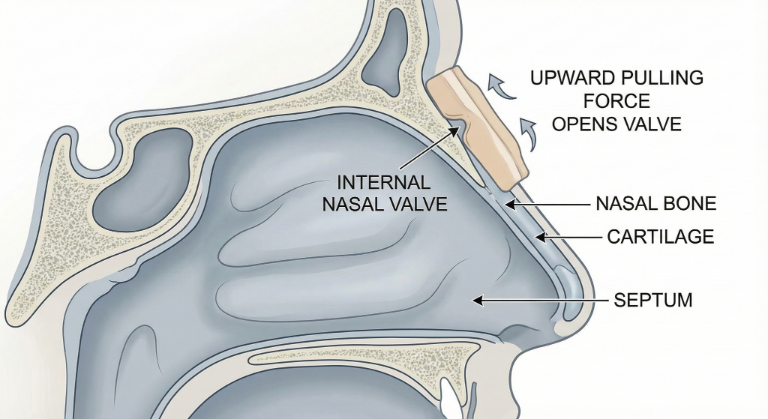
Best for Safety: Nasal Strips. They physically open the nasal passages, making mouth breathing unnecessary for most users.
-
Best for Habit Correction: Professional Mouth Tape. Unlike DIY tapes, medical-grade versions feature gentle adhesives and emergency vent holes.
-
What to Avoid: Rigid Chin Straps. These can push the jaw backward, narrowing the airway and potentially causing Temporomandibular Joint (TMJ) disorders.
Why You’re Looking for an Alternative in the First Place
](https://nasalstripsmanufacturer.com/wp-content/uploads/2026/02/Mouth-Tape-Alternative-1.png "")
Let’s be honest. Nobody wakes up thinking, "I can't wait to duct tape my mouth shut tonight." Most people discover mouth taping through social media, and while it sounds like a biohacking miracle, using the wrong tools often leads to a quick search for alternatives.
Usually, that desire stems from specific "deal-breakers": Skin Irritation (standard tapes steal your skin’s natural oils), "Locked-In" Anxiety (tape that feels too rigid), and Facial Hair Struggles. At the factory, we see this every day. The problem isn't the concept of mouth taping; it’s the physics of the material. If the "peel strength" is built for bandages or boxes instead of human skin, of course you’re going to look for a way out.
Top 5 Mouth Tape Alternatives: The Honest Comparison
Most alternatives promise the same result: consistent nose breathing. However, the path they take to get there varies wildly.
| Alternative | How it Works | The Catch | Score |
|---|---|---|---|
| Chin Straps | Uses a wrap to pull your jaw shut. | Can push the jaw backward and narrow your airway. | ⭐⭐ |
| Nasal Strips | Physically lifts nasal passages to increase airflow. | Doesn't keep the mouth shut; best used as a "partner". | ⭐⭐⭐⭐ |
| Oral Appliances | A dental device that keeps your jaw/tongue forward. | Expensive, requires professional fitting, and can be bulky. | ⭐⭐⭐ |
| Side Sleeping Pillows | Uses shape to discourage back-sleeping. | Limited effectiveness if you naturally roll. | ⭐⭐⭐ |
| Myofunctional Therapy | Exercises to strengthen tongue/facial muscles. | Takes months of commitment to see real results. | ⭐⭐⭐⭐ |
Chin Straps: The "Jaw Trap" and Anatomical Reality
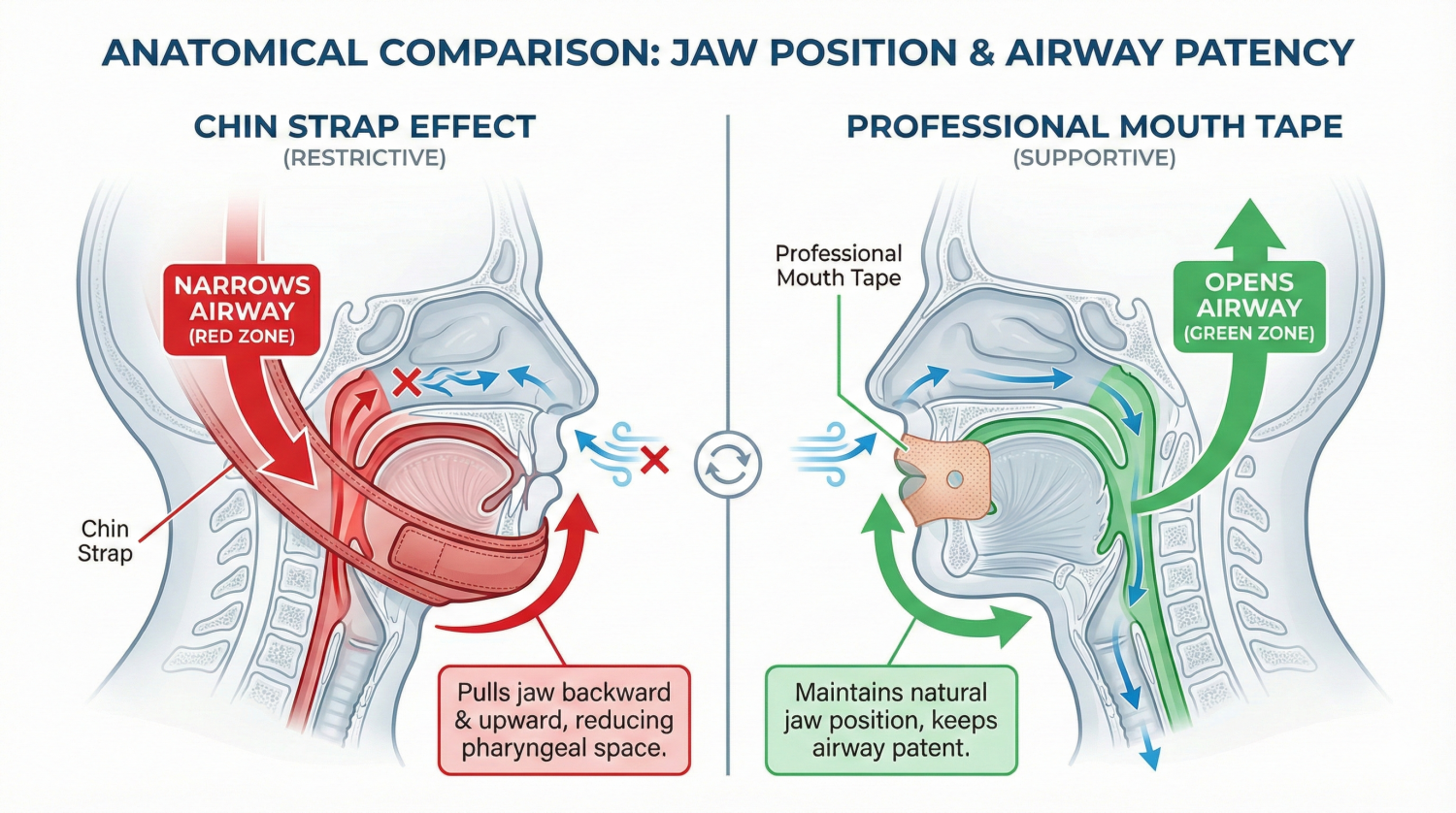
The Chin Strap is the most popular "non-scary" alternative. While it feels safer on the surface, from an anatomical perspective, it often solves one problem by creating a much larger physical obstacle.
Most chin straps work by pulling your lower jaw (mandible) upward. However, because of the wrap angle around your skull, the force isn't just vertical; it’s backward. This is what we call the "Jaw Trap." This backward force can compress the jaw joint and push the base of the tongue toward the soft palate. In our analysis, we've seen that for many users, a chin strap can actually increase breathing resistance. A strap is a "brute force" solution; mouth tape is a "soft signal" that guides your lips without shifting your skeletal structure.
The Factory’s Secret: What Makes a "Safe" Mouth Tape?
If you’ve seen people using standard medical tape or even electrical tape, you've seen the real safety risk. Those tapes are built for "peel strength"—staying stuck to a patient who isn't moving—not for the delicate skin of your lips that moves thousands of times during sleep.
At our factory, we focus on the MVTR (Moisture Vapor Transmission Rate). A safe mouth tape isn't a solid barrier; it’s a filter. We use laser-cut micro-ventilation holes that allow for emergency airflow if your nose suddenly blocks up. We also use medical-grade Pressure-Sensitive Adhesives (PSA).
Unlike "glue," these adhesives are designed to create a secure seal that can be broken instantly with a slight internal pressure from the mouth. Furthermore, high-quality tape accounts for "sweat maceration"—where trapped moisture weakens the skin. By using breathable fabrics, we ensure your skin stays healthy and irritation-free. It’s the difference between being "trapped" and being "guided."
Understanding the 7-Night Adaptation Curve
Many users quit on night one because they feel a slight claustrophobia. This is a natural survival instinct. However, our data shows a clear path to success that we call the 7-Night Adaptation Curve:
-
Nights 1-2: The Rejection Phase. Your brain views the tape as a "foreign object." You might wake up and rip it off in your sleep without knowing.
-
Nights 3-5: The Efficiency Phase. Your nervous system begins to realize that nasal breathing is more efficient. Your heart rate typically stabilizes, and you stop fighting the tape.
-
Nights 6-7: The Automatic Phase. The "muscle memory" kicks in. You no longer feel the tape, and you wake up feeling significantly more refreshed because your body has accepted the nose-first default.
The Ultimate Solution: The "Nose-First" Protocol

Most people fail with mouth tape because they treat it as the only step. However, if your nasal passages are narrow or inflamed, your brain will override any tape to keep you alive. This creates the "panic" that makes you want to quit.
The real secret isn't finding a tape alternative; it’s optimizing your nose first. We recommend the "Nose-First" Protocol: start with a nasal strip to physically open the airway. Once you realize how much easier it is to draw air through your nose, the anxiety of "taping" disappears. The tape then serves as a gentle reminder while the strip does the heavy lifting for your breathing.
Deep Dive FAQ: Safety and Science
-
Can I use mouth tape if I have a cold or allergies? If your nasal passages are 100% blocked, do not use mouth tape. However, if you have mild congestion, using a nasal strip in combination with a vented mouth tape is often safer than mouth breathing, as it prevents the "dry-throat" effect that exacerbates cold symptoms.
-
Will I become "dependent" on these products to breathe? No. This is Muscle Memory Training. By keeping your mouth closed and your nasal passages open, you are training your tongue to rest on the roof of the mouth. Over time, many users find their natural "resting posture" improves to the point where they need the tape less frequently.
-
Is this safe for children? Mouth tape should never be used on infants or anyone who cannot remove it themselves. For children, always consult an ENT first, as mouth breathing can often be a sign of enlarged tonsils or adenoids that require medical attention.
Conclusion: Start Small, Sleep Better
You don’t have to dive into the deep end on night one. If you’re still nervous about mouth tape, start with a nasal strip tonight. Experience what it feels like to have a truly "open" nose. Once that path is clear, you’ll find that a professional, breathable mouth tape is the final piece of the puzzle.