Mouth Breather vs. Nose Breather: 7 Shocking Facts You Need to Know
](https://nasalstripsmanufacturer.com/wp-content/uploads/2026/02/Mouth-Breather-vs.-Nose-Breather1.png "")
Think about this for a second: you take roughly 25,000 breaths every single day.
It is the most natural thing in the world, yet most of us never give it a second thought. But here is the thing—how you take those breaths is the hidden key to your energy, your sleep, and even how your face looks in the mirror.
I’ve spent years studying how small habits change health, and I can tell you that this might be the biggest one yet. If you often feel tired, wake up with a mouth as dry as a desert, or feel like a zombie by 2 PM, your breathing might be the secret culprit. There is a massive, life-changing difference between being a "mouth breather" and a "nose breather."
Experts at the Cleveland Clinic confirm that our bodies are literally built for nose breathing. It is how we were designed to function at our absolute best.
⚡ TL;DR: The Quick Version
-
Nose Breathing = Superpower: Your nose filters air, produces Nitric Oxide, and relaxes your nervous system.
-
Mouth Breathing = Health Thief: It causes "brain fog," dry mouth, and can even change your face shape (Adenoid Facies).
-
The #1 Fix: Check your tongue posture. It should be suctioned to the roof of your mouth, not resting on the floor.
Fact #1: Your Nose is a Luxury Air Purifier
Your nose is not just a bump on your face. It is a highly advanced, three-stage air processing plant.
Think of it as a luxury air purifier that you own for free. While your mouth is just a wide-open hole, your nose is busy doing three critical jobs every time you inhale:
-
It Filters: Your nose is lined with tiny hairs and mucus. These trap dust, bacteria, and allergens before they ever touch your lungs.
-
It Warms: Cold air is a shock to your system. Your nose brings air up to body temperature instantly.
-
It Humidifies: It adds moisture so your throat and lungs don't dry out.
Fact #2: The "Secret Sauce" Called Nitric Oxide
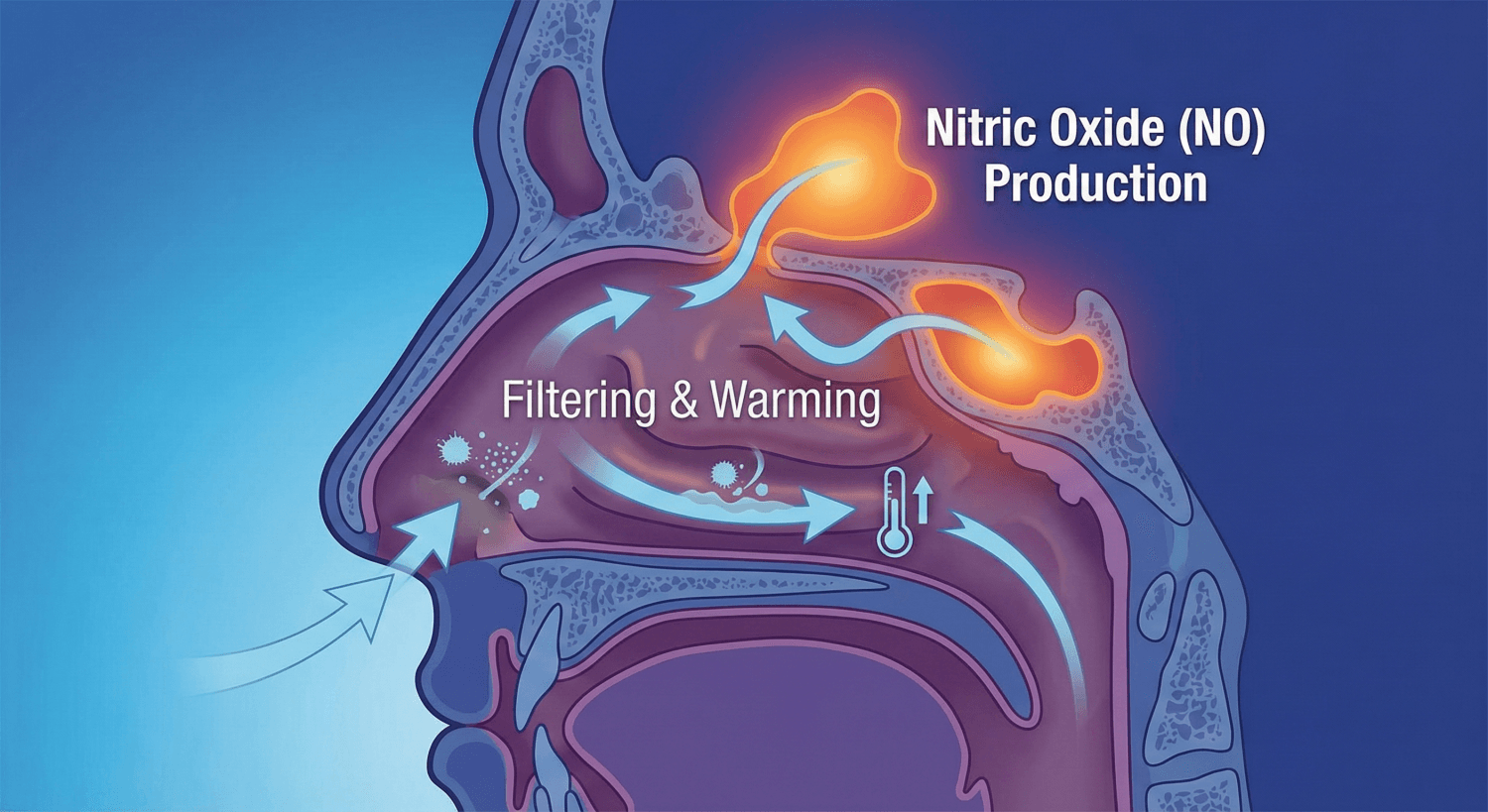
When you breathe through your nose, your sinuses produce a tiny molecule called Nitric Oxide (NO).
According to research from NCBI, Nitric Oxide is a game-changer. It helps your blood vessels expand. This means your lungs can absorb oxygen much more efficiently.
In fact, nose breathing can increase oxygen uptake by up to 18% compared to mouth breathing.
Without this molecule, your heart has to work harder to get oxygen to your brain and muscles. This is why mouth breathers often feel sluggish—they are getting less "fuel" from the same amount of air.
Fact #3: Mouth Breathing Triggers an Oral "Micro-War"
Your mouth is home to a delicate balance of bacteria. Mouth breathing dries out your saliva. This is a big deal because saliva is your mouth's natural defense system.
According to Dr. Kami Hoss, a leading expert in oral health, mouth breathing drops your mouth’s pH levels. This makes your mouth more acidic.
In an acidic environment, harmful bacteria grow like crazy. This leads to:
-
Higher risk of cavities (even if you brush twice a day!)
-
Chronic bad breath that mints can't fix.
-
Gum disease and inflammation.
If you are a mouth breather, you are basically inviting a bacterial invasion every time you sleep.
Fact #4: It is the Primary Driver of Sleep Apnea and Fatigue
Ever wake up feeling like you didn't sleep at all? Mouth breathing might be why.
When you breathe through your mouth at night, your tongue often falls back. This partially blocks your airway. This forces your body into a low-oxygen stress mode.
Instead of resting, your heart works overtime to keep you alive. This is a primary driver of Sleep Apnea and explains why many mouth breathers struggle with heavy snoring and daytime exhaustion.
Your brain stays in a state of high alert all night, so you never get the deep, restorative sleep you need.
Fact #5: "Mouth Breather Face" is a Real Medical Condition
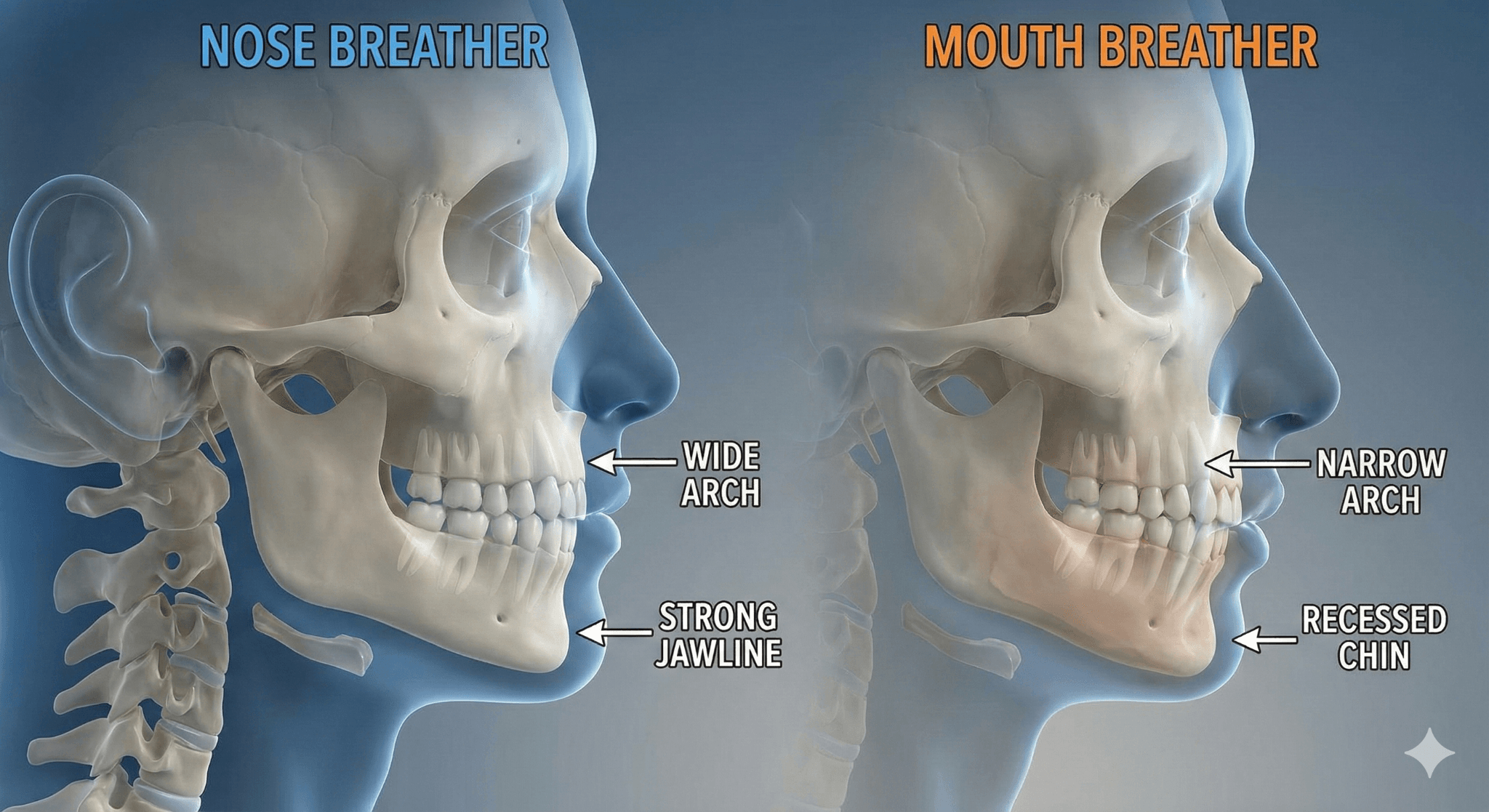
Scientists call it Adenoid Facies. It all comes down to tongue posture.
Think of your tongue as a natural retainer. When you breathe through your nose, your mouth stays closed, and your tongue naturally rests on the roof of your mouth.
This constant pressure pushes your upper jaw outward. It creates a wide smile and high cheekbones.
But when you breathe through your mouth, your tongue drops to the bottom of your mouth. Without that support, your upper jaw starts to narrow. Over time, this leads to a "melted" look:
-
Long, narrow face shape.
-
Recessed or "weak" chin.
-
Droopy eyelids or dark circles.
-
Crowded or crooked teeth.
Clinical cases from Hamilton Orthodontics show that this matters most during childhood. However, adults are not safe either. Years of mouth breathing can lead to sagging facial muscles and a tired expression.
Fact #6: Your Nose is a Remote Control for Your Nervous System
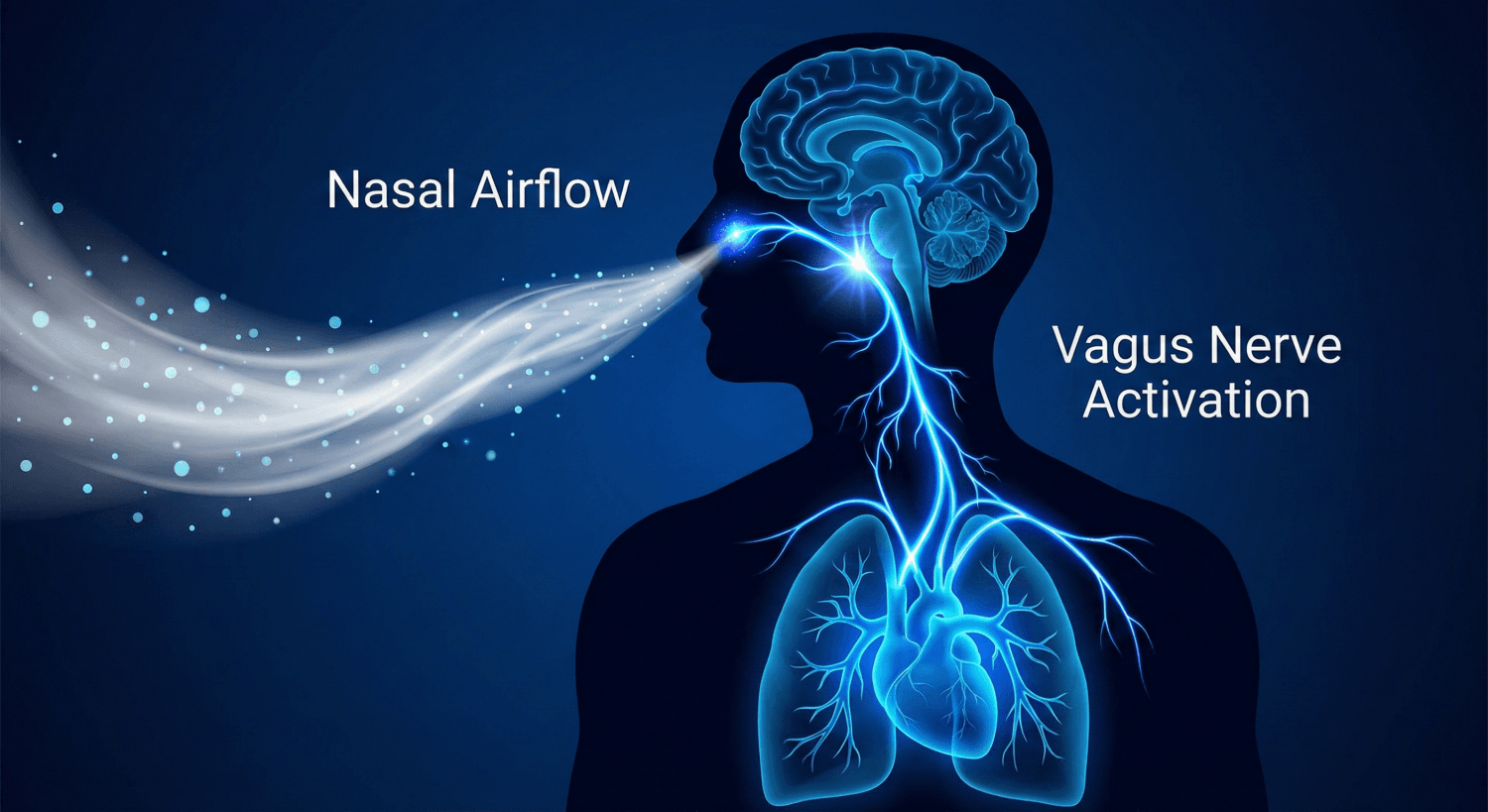
Did you know your nose is like a remote control for your brain?
This is because of the Vagus Nerve—the longest and most important nerve in your body. It is your body's "calm down" switch.
When you breathe through your nose, you take deeper, slower breaths. This pushes against specific receptors that signal your brain: "Everything is fine. You are safe."
This triggers your parasympathetic nervous system—the part that handles "rest and digest." It lowers your heart rate and relaxes your muscles.
Mouth breathing does the opposite. It leads to shallow breaths that trigger the sympathetic nervous system—the "fight or flight" mode. This is why chronic mouth breathers often feel stuck in a loop of anxiety or stress.
According to Calm.com, nose breathing is your best tool for emotional resilience.
Fact #7: You Can Re-Train Your Body (The Recovery Plan)
The good news? Breathing is a habit, and habits can be changed. You don't need surgery. You need to re-train your muscles.
The 3-Step Self-Test
-
The Morning Check: Do you wake up with a mouth as dry as a desert?
-
The Mirror Test: Stand in front of a mirror. Are your lips touching naturally?
-
The Tongue Spot-Check: Close your mouth. If your tongue is on the floor of your mouth, that is a red flag. It should be suctioned to the roof of your mouth.
Mouth Taping
Mouth taping is a huge trend, but safety is key. Never use duct tape.
I recommend guidelines from Myotape. They use a "surround" design that allows you to open your mouth if needed. This forces your nose to do its job safely at night.
Myofunctional Therapy
If your tongue is "lazy," you need to wake it up. Try this for 2 minutes a day:
-
The Tongue Click: Suction your tongue to the roof of your mouth and snap it down with a loud click. Do this 20 times.
-
The "Spot" Reminder: Whenever you check your phone, check your tongue. Ensure the tip is resting on the ridge right behind your top front teeth.
Final Thoughts: Your Next Breath Matters
You now have the tools to change your life, one breath at a time. Breathing is the only vital function you can consciously control.
By choosing your nose over your mouth, you are choosing better sleep, a sharper mind, and a more confident version of yourself.
Tonight, focus on one thing: keep your lips sealed as you drift off to sleep. Notice how you feel when you wake up. Your body will thank you for finally letting it breathe the way it was always meant to.