Is Mouth Taping Dangerous? Medical Risks & Safety Guide
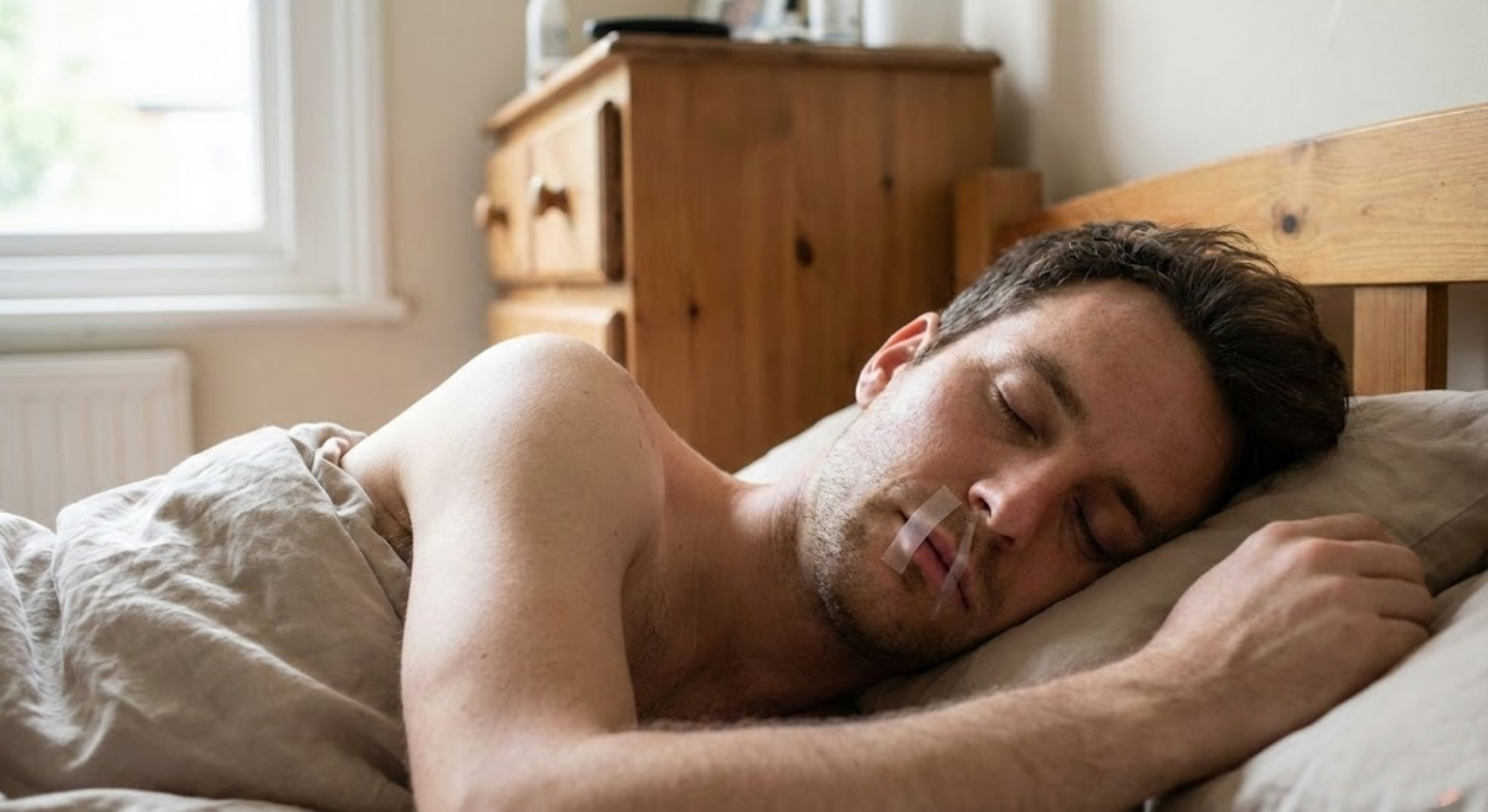
1. Sleep Hack or Dangerous Experiment?
Let’s get real.
Those viral mouth taping videos look like a miracle fix, but it isn't just a game. Before you seal your body’s only emergency airway, you deserve the medical truth.
To separate the hype from the science, I’ve grounded this guide in the insights of experts like Dr. Vic Veer.
-
The Problem: You're tired of waking up exhausted and desperate for better rest.
-
The Reality: Your "fix" could become a dangerous medical risk if done incorrectly.
Mouth taping involves complex chemical shifts that aren't for everyone. Let’s strip away the social media noise and figure out if this is actually safe for you.
2. What is Mouth Taping? The Logic of Nasal Breathing
Let’s be honest: the first time you hear about "taping your mouth shut," it sounds crazy—maybe even scary. I felt the same way.
But the goal isn't to silence you. It’s a gentle nudge to help your body rediscover its most important forgotten habit: Nasal Breathing.
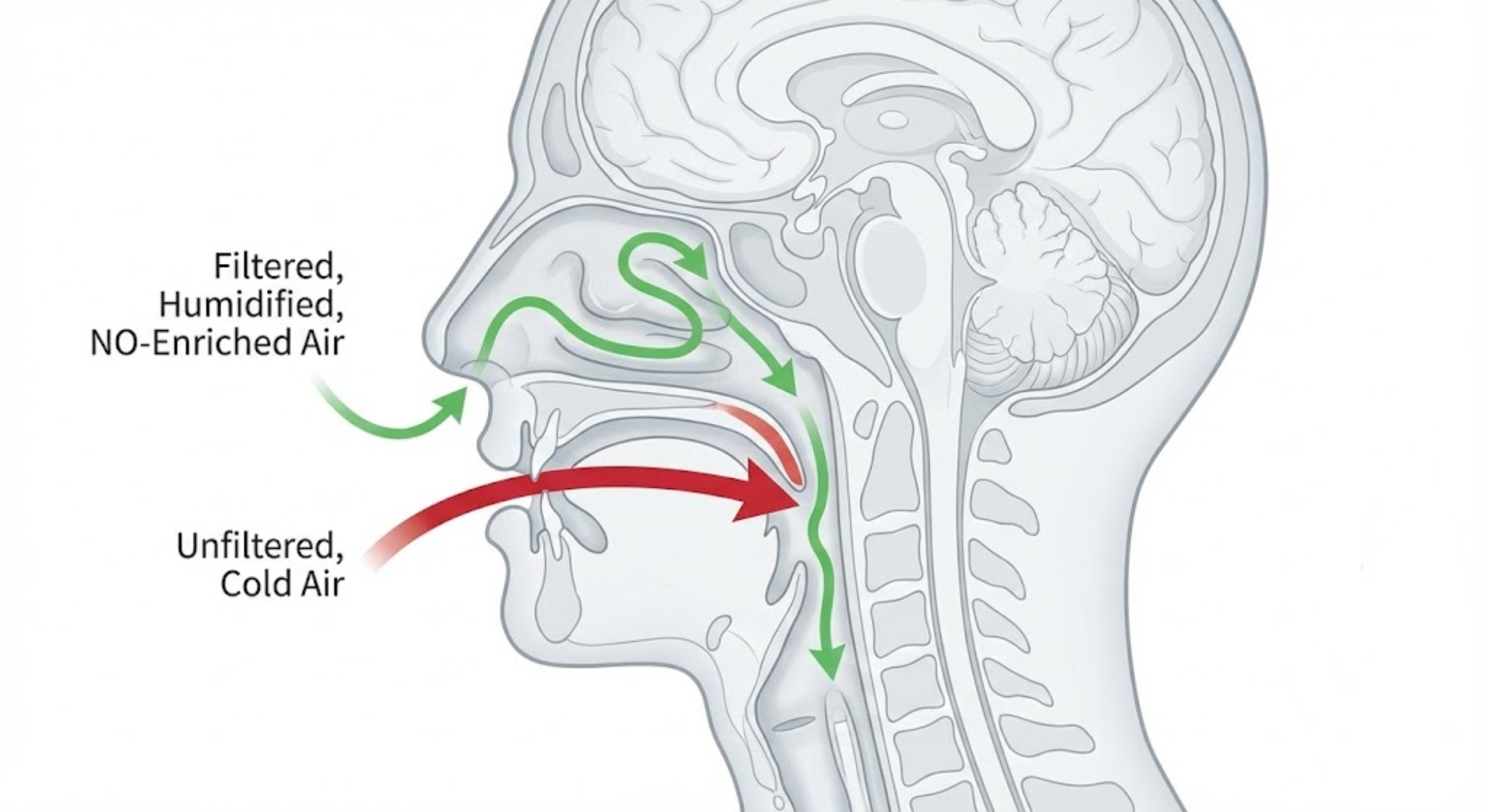
Think of your nose as a high-tech air treatment plant. While you sleep, it filters dust, adjusts humidity, and produces a vital molecule that helps you rest deeper.
Mouth breathing, on the other hand, is like leaving a window open during a storm. It strips moisture from your throat (hello, dry morning mouth) and lets your tongue slide back, which is usually the culprit behind loud snoring.
The tape is just a signal to your brain: "Hey, let’s use the nose tonight." It’s a simple tool to retrain your system for the healthy breathing you were designed for.
3. Medical Deep Dive: How It Alters Your Physiology
It’s not just about blocking a hole; it’s a delicate chemical dance inside your body.
The Master Commander: CO2
Think of Carbon Dioxide (CO2) not as waste, but as the "Master Commander" of your respiration.
When you apply the tape, CO2 levels in your blood rise slightly. This triggers a tiny spark of adrenaline—not to wake you up, but to act as a natural decongestant. It physically shrinks swollen membranes in your nose.
That mild "air hunger" you feel at first? It’s actually the physiological key that unlocks your nasal airway.
The Secret Weapon: Nitric Oxide (NO)
Meanwhile, your nose acts as a factory for Nitric Oxide (NO).
-
What it does: It is a powerful vasodilator that relaxes your blood vessels.
-
The result: It helps your lungs absorb oxygen much more efficiently.
This is why nasal breathers report feeling genuinely refreshed. They aren't just breathing; they are getting more value out of every breath.
4. The Core Warning: Is Mouth Taping Dangerous? 5 Potential Risks
Mouth taping can be dangerous for individuals with undiagnosed sleep apnea, nasal obstructions, or heart disease. Key risks include hypoxia (low oxygen levels), skin irritation, and aspiration. Never use mouth tape after consuming alcohol or sedatives. Always consult a medical professional to ensure your nose can safely provide sufficient oxygen.
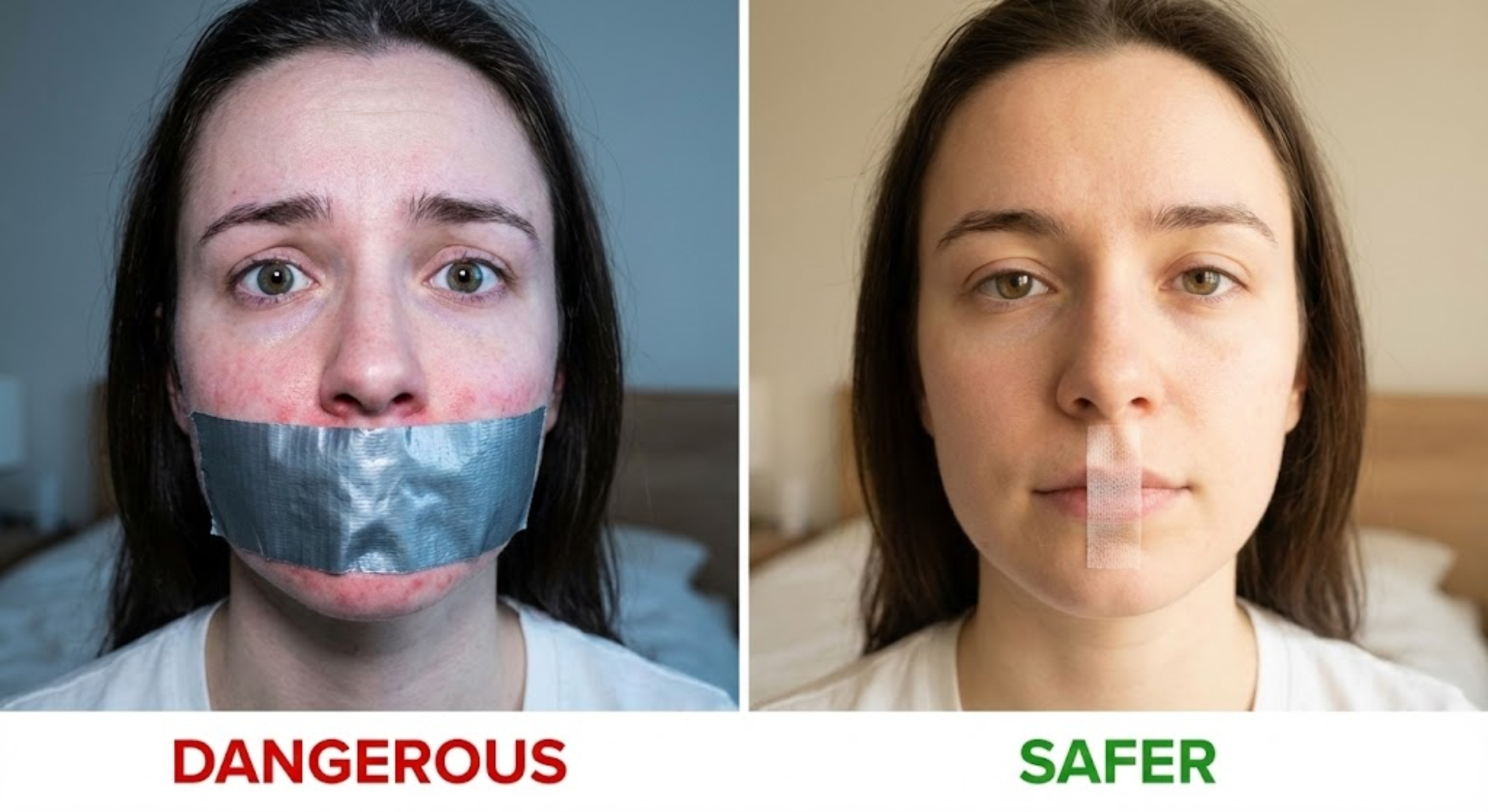
While nasal breathing is a biological superpower, mouth taping is not a "set it and forget it" solution. If you try this under the wrong conditions, a clever sleep hack can quickly transform into a medical nightmare.
The Red Line: Obstructive Sleep Apnea (OSA)
I need to be blunt: If you have undiagnosed OSA, do not tape your mouth. > During sleep, your tongue collapses, blocking your airway. Your body relies on opening your mouth as a "life-saving emergency valve" to gasp for air.
By sealing that valve, you cut off your only backup. This causes blood oxygen levels to crash, putting immense strain on your heart.
A Deeper Look at the Real Dangers
- The Aspiration Risk (Rare but Serious)
It sounds like a movie plot, but it’s real medical physics. If you vomit or have severe acid reflux during sleep, a sealed mouth becomes a barrier. Instead of expelling it, fluids can be inhaled into the lungs, leading to life-threatening pneumonia.
- The Skin-Safe Myth
I see people using leftover duct tape or office tape to save money. Please, stop. Your lips are incredibly delicate. Industrial adhesives contain harsh chemicals that cause painful tearing, rashes, and chemical burns.
- The "Air Hunger" Panic
Your brain is hardwired to survive. If your nose is blocked and can't supply enough oxygen, your brain triggers a "fight or flight" panic response. You wake up with a racing heart and a sense of suffocation—the opposite of restful sleep.
- Oxygen Deprivation (Hypoxia)
When you force nasal breathing on a congested system, your body might exist in a state of chronic low-level hypoxia all night. You aren't resting; you're just barely surviving.
- The Golden Rule of Safety
Never, ever use mouth tape after consuming alcohol or taking sedatives. These substances numb your brain’s "suffocation alarm." You might struggle for air without ever waking up to rip off the tape. Safety is the foundation of your recovery.
5. Absolute Contraindications: Who Should NEVER Try It?

Before you even touch that tape, I want you to cross-check your health against this "Blacklist." Mouth taping is a precision tool, not a universal remedy. If you fall into these categories, the risks far outweigh the benefits.
-
Severe Nasal Obstruction: If you have a deviated septum, polyps, or chronic sinusitis, your nose physically cannot supply enough oxygen. Forcing it is like trying to breathe through a coffee straw.
-
Confirmed or Suspected OSA: If you are a heavy snorer or wake up gasping, your airway is already collapsing. Do not remove your emergency backup.
-
Heart Disease & Morbid Obesity: These conditions mean you have lower oxygen reserves. Even a minor dip in oxygen during the night can trigger dangerous heart arrhythmias.
-
Children and Infants: Hard Rule: Never use mouth tape on a child. Their airways are too narrow, and they may lack the ability to remove the tape in an emergency.
If you have a cold, allergies, or have been drinking tonight, skip the tape. Your life is more important than "optimizing" your sleep.
6. Safety Guide: How to Minimize Risk If You Decide to Try
So, you’ve cleared the blacklist and you're ready to try. My goal now is to make sure your brain feels safe so your body can rest.
Step 1: Ditch the Household Tape
Please, stop using Scotch tape or duct tape. Use medical-grade micropore tape or specialized sleep strips. They are breathable and designed to release instantly without tearing your skin.
Step 2: The "15-Minute Stress Test"
Never make your first attempt right before sleep. Perform a daytime pressure test:
-
Apply the tape while watching TV or reading.
-
Keep it on for 15 minutes while fully awake.
-
If you feel a "smothering" sensation or struggle for air, stop. Your nose isn't ready.
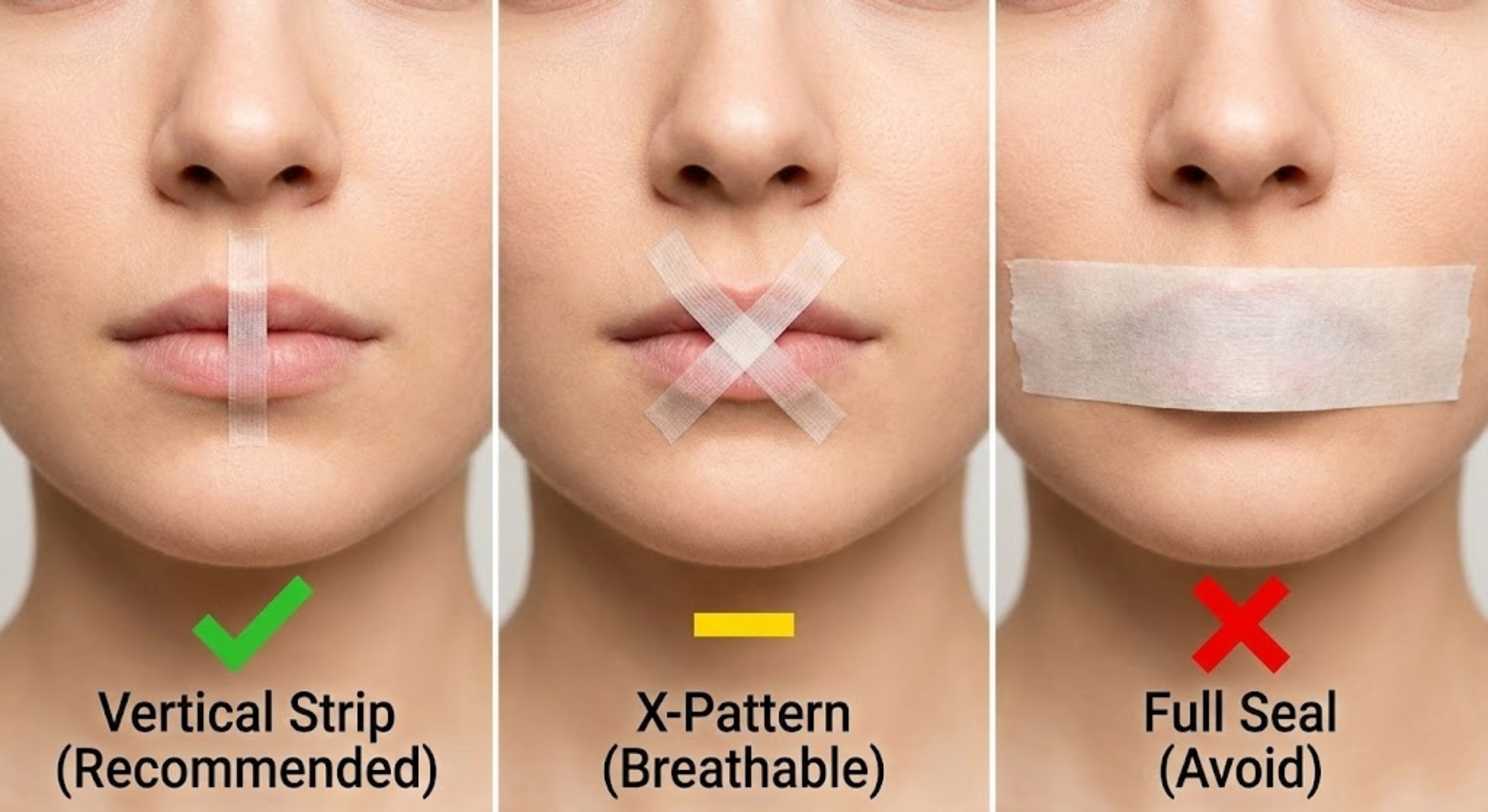
Step 3: Use the "Vertical Strip" Method
Don't seal your mouth horizontally like a hostage. Place a single thin strip vertically over the center of your lips. This leaves the corners of your mouth open, providing a vital psychological safety net that you can still breathe if needed.
Focus on habit retraining, not physical force. If it doesn't work tonight, try again tomorrow.
7. Alternatives: Other Ways to Stop Mouth Breathing
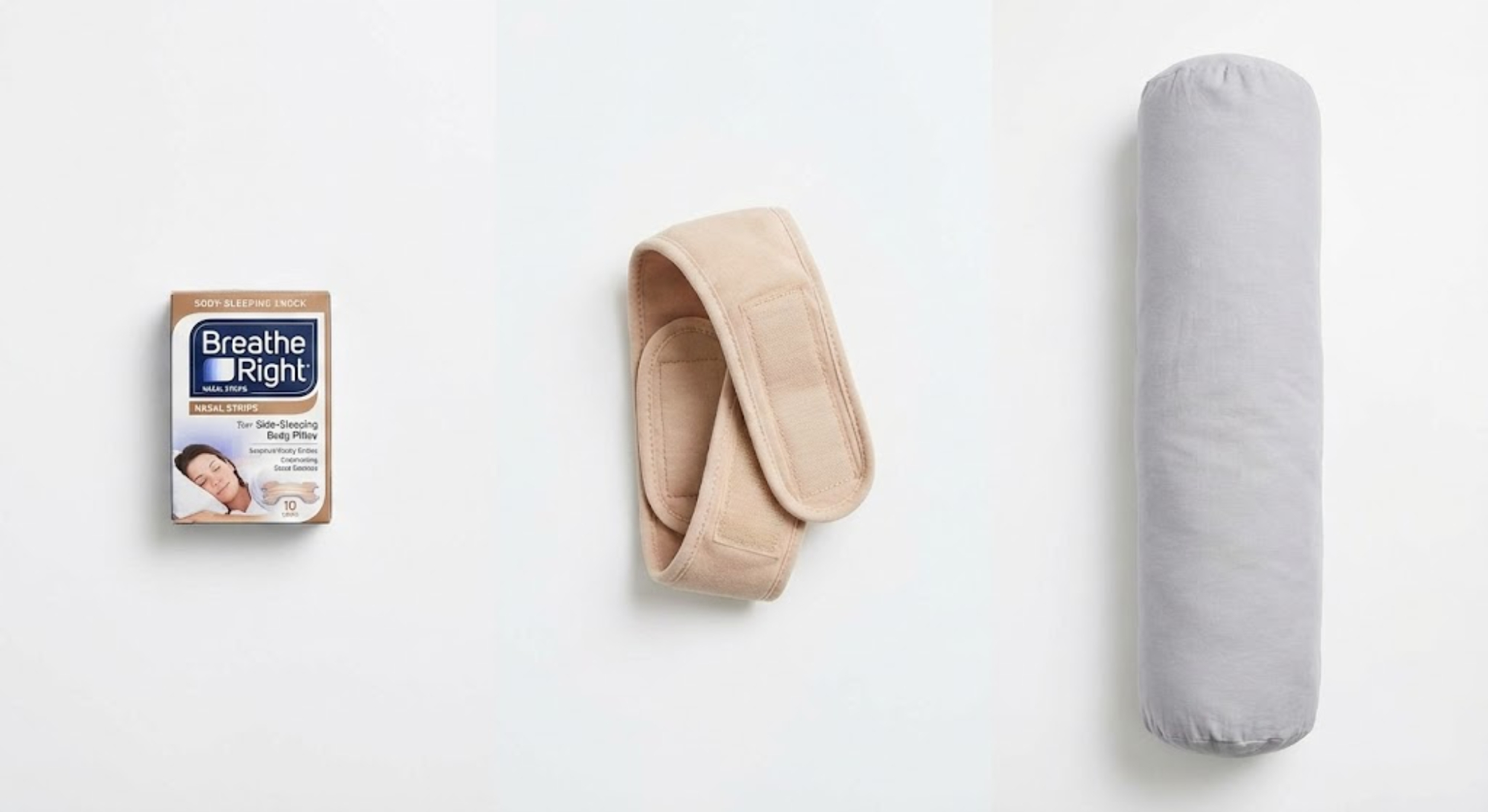
Mouth taping is viral, but it isn't the only way to save your sleep. If the idea of tape makes you panic, don't worry. Our ultimate goal is habit retraining, not lifelong dependency.
The following table compares the most effective alternatives to mouth taping based on their mechanism and safety profiles.
| Method | Mechanism | Key Benefits | Best For |
|---|---|---|---|
| Mouth Taping | Physically seals the lips to force airflow through the nasal passages. | Provides immediate feedback and direct habit retraining. | Habitual mouth breathers with clear nasal passages. |
| Nasal Strips | Uses external tension to pull nostrils open and increase nasal volume. | Non-invasive; naturally encourages lip closure by reducing air resistance. | Users with narrow nasal valves or nighttime congestion. |
| Chin Straps | Provides mechanical support to keep the jaw from dropping during sleep. | Keeps the mouth closed without adhesives; highly stable. | Heavy snorers or those with significant jaw relaxation. |
| Positional Therapy | Uses specialized pillows or devices to encourage side-sleeping. | Prevents gravity-induced tongue collapse and airway obstruction. | Positional snorers and those with mild obstructive sleep apnea. |
| Buteyko Exercises | Guided breathing drills designed to increase $CO_{2}$ tolerance. | Long-term physiological adaptation without relying on external tools. | Individuals seeking natural, long-term respiratory retraining. |
Here are expert-backed alternatives:
-
Nasal Strips (External Dilation): These stick to the outside of your nose and physically pull the nostrils open. Once the nose is "wide open," many people find their mouth shuts naturally.
-
Chin Straps: A mechanical alternative that supports the jaw from underneath. Be careful to choose one that pulls up, not back, to avoid narrowing your airway.
-
Positional Therapy (Side Sleeping): Sleeping on your back makes your tongue fall backward. Use a body pillow to stay on your side, letting gravity keep your airway clear.
-
Buteyko Exercises: Breathing drills designed to retrain your brain’s tolerance to CO2, helping you stay calm with lighter nasal breathing during the day.
Think of the tape as "training wheels." The best tool you own is your body’s natural ability to adapt.
8. Taping is a Tool, Not the Goal
Mouth taping shouldn't be a lifelong crutch.
It is a temporary bridge to help you rediscover natural nasal breathing. My goal for you is simple: I want you to wake up feeling genuinely restored and energetic.
But remember, safety is the foundation of sleep. If you fall into a high-risk group or feel any distress, stop immediately.
⚠️ Key Safety Step: Before reaching for the tape tonight, consult a sleep specialist to confirm your nasal health.
Here’s to a safer, deeper sleep.
Meet the Author
Scott Chou Pulmonologist | Attending Physician With over 8 years of clinical experience in the Department of Respiratory and Critical Care Medicine at a leading Grade A hospital. Scott specializes in chronic airway diseases and sleep-disordered breathing. Having treated numerous patients struggling with sleep quality, he is dedicated to translating complex respiratory physiology into safe, evidence-based health guidance. "In medical science, safety is non-negotiable. My goal is to ensure that viral health trends are always weighed against clinical reality."