Do Nasal Strips Make Your Nose Bigger? Truth Behind the Illusion
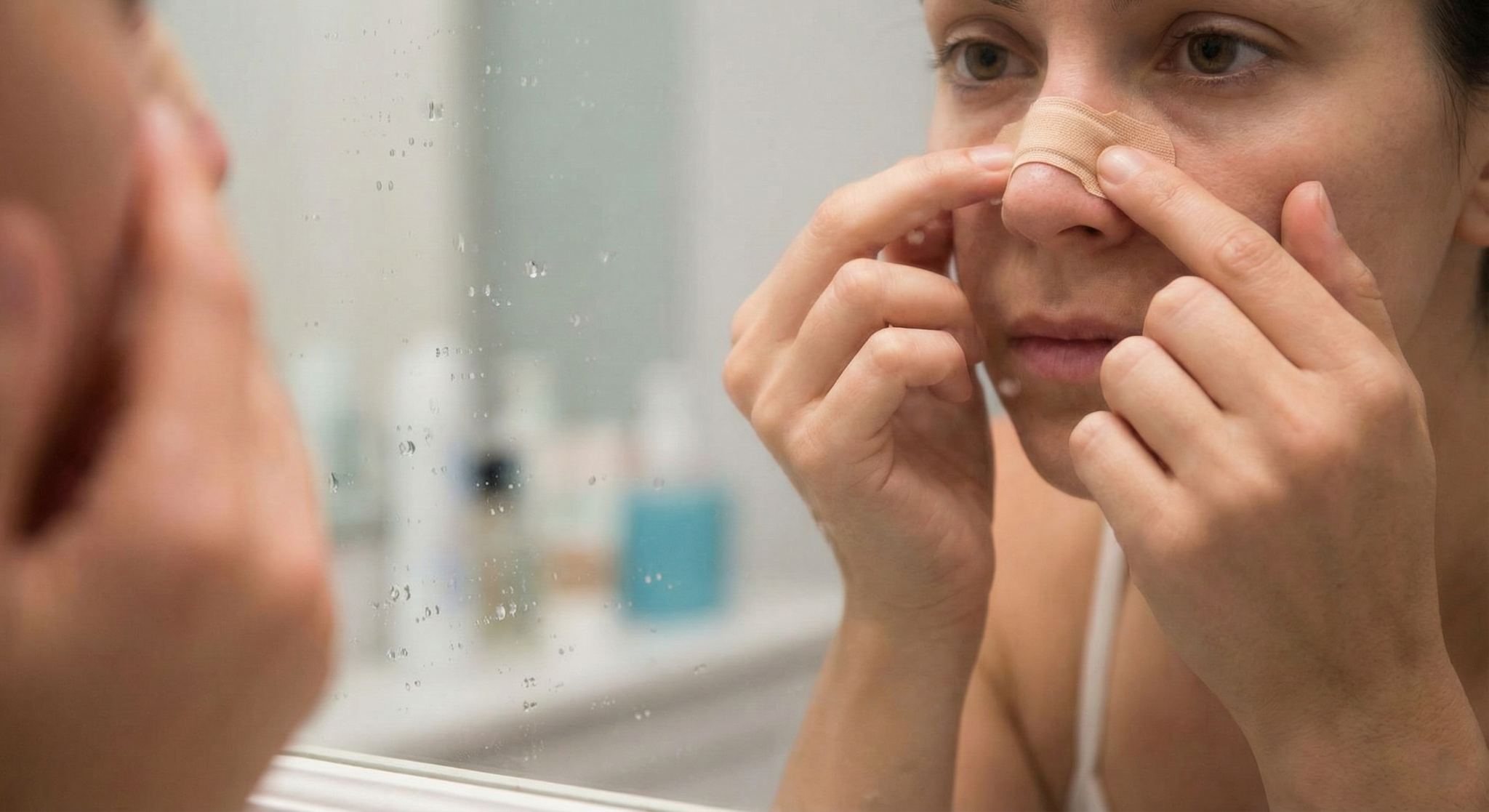
I know that split-second of panic. You peel off a nasal strip, look in the bathroom mirror, and think: "Wait... is my nose actually wider?"
It’s a common worry, especially among the performance-focused community on Reddit's Biohackers sub.
You started using these strips to optimize your sleep and oxygen intake. Now, you’re worried you’ve traded a good night’s rest for a permanently altered face. You aren't alone. Search for "Breathe Right nose widening" and you'll find thousands of people staring at their reflections with the same doubt.
But before you stress any further, let’s get one thing straight: You can relax. Nasal strips cannot permanently widen your nose. Here is the deep science of why it feels like they do, why your anatomy is safe, and how to protect your skin barrier in the process.
The Quick Verdict: Can Nasal Strips Change Your Anatomy?
-
Permanent Growth? Absolutely not. Nasal strips exert about 25–30 grams of pull.
-
The Force Gap: To reshape human cartilage, you need surgical-grade force or years of constant orthopedic pressure.
-
The Widening Illusion: What you see in the morning is "reactive hyperemia" (increased blood flow) and temporary skin stretching.
-
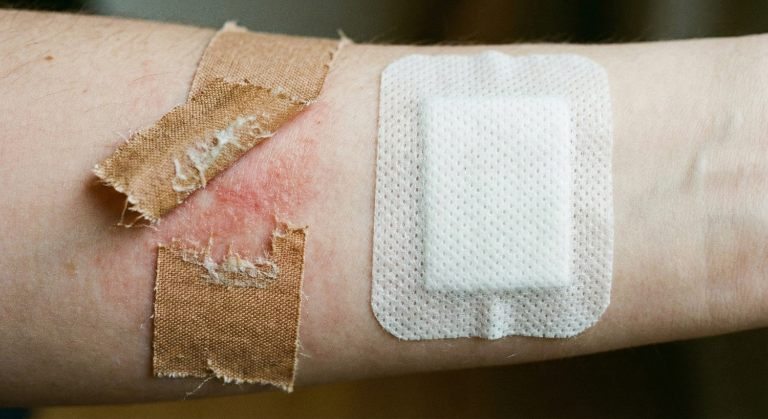
Post-Removal Redness: Yanking the strip off causes localized inflammation. Inflammation adds volume. This fades within 30–60 minutes.
1. Simple Physics: The Resilience of Hyaline Cartilage
To understand why your nose won't stay wide, you have to look at what's under the skin. Your nose is a complex structure of bone and flexible hyaline cartilage.
Nasal strips work by targeting the internal nasal valve—the narrowest part of your respiratory path. When the flexible spring inside the strip tries to straighten out, it mechanically lifts the sidewalls of your nostrils.
](https://nasalstripsmanufacturer.com/wp-content/uploads/2026/02/Do-Nasal-Strips-Make-Your-Nose-Bigger-1.png "")
The Bio-Mechanical Reality
In biomechanics, every tissue has a "modulus of elasticity." This measures how much force is required to permanently deform it.
Hyaline cartilage is packed with Type II collagen and elastic fibers designed to withstand the pressures of breathing and physical impact. Research suggests it takes significant, sustained force (often measured in kilograms) to reorganize the collagen matrix of the nose.
Compare the Forces:
-
Nasal Strip Pull: Roughly $0.25N$ to $0.30N$ (about 30 grams).
-
Common Actions: The pressure applied during a sneeze or when you wipe your face with a towel is often 5 to 10 times greater than the pull of a sleep strip.
If washing your face doesn't widen your nose, a 30-gram spring certainly won't. Your cartilage is built to "snap back" into its original shape like a high-quality rubber band.
2. Try the "Cottle Maneuver" (An Interactive Diagnostic)
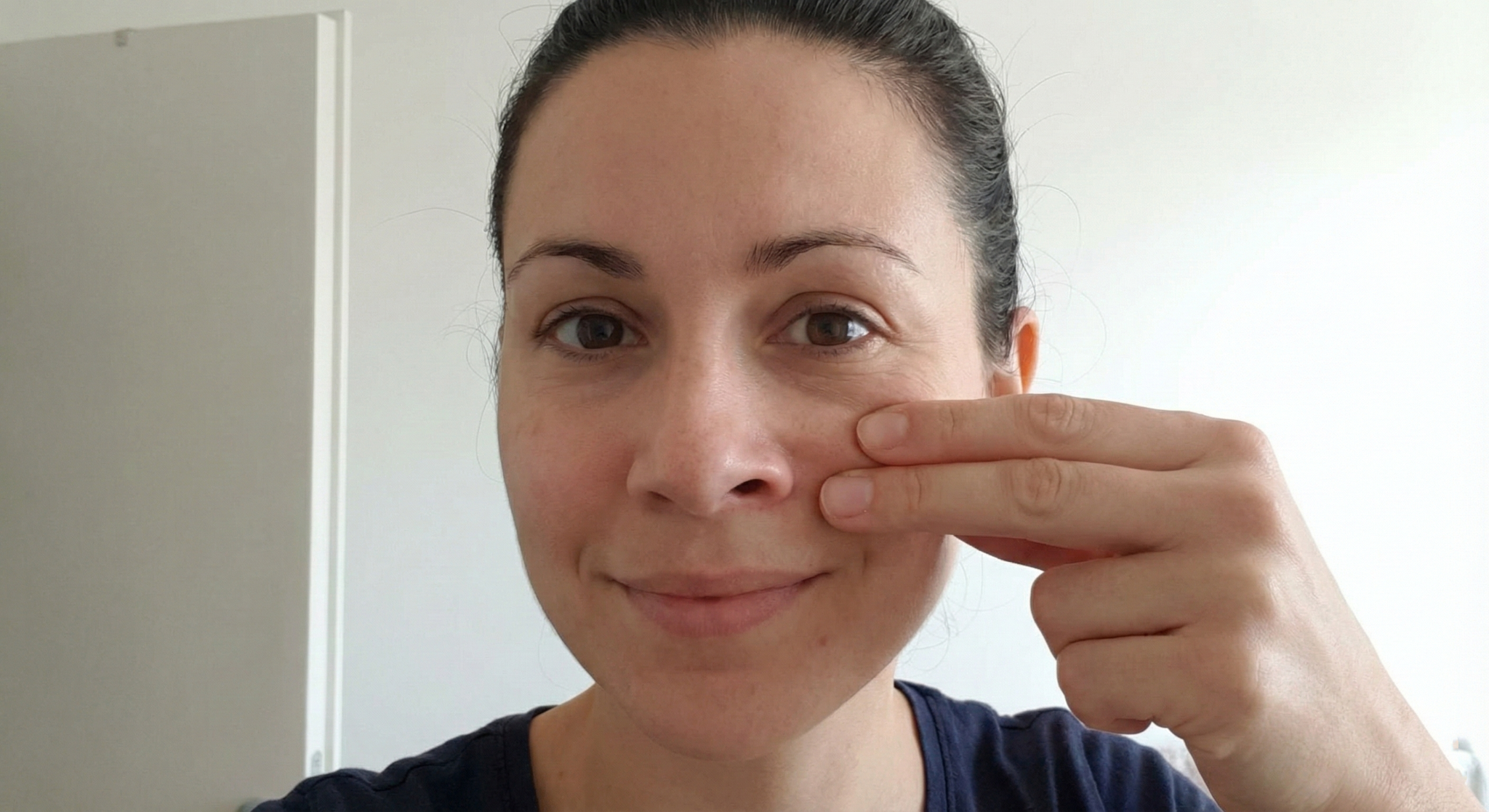
If you’re still worried that the constant "pulling" is too much for your face to handle, try this clinical test used by ENT doctors to diagnose nasal valve collapse.
-
Place one or two fingertips on your cheeks, right next to your nostrils.
-
Gently pull the skin outward toward your ears.
-
Take a deep breath.
Does it feel significantly easier to breathe? This is the Cottle Maneuver.
It mimics exactly what a nasal strip does. You’ve likely done this hundreds of times in your life—whether itching your face or washing it—without your nose getting wider. The nasal strip is simply holding that "sweet spot" open while you sleep.
3. Why It Looks Bigger in the Morning: The "Widening Illusion"
If the change isn't permanent, why does the mirror say otherwise? There are four scientific reasons for "The Widening Illusion."
A. Reactive Hyperemia (Blood Flow Surge)
Removing a strong adhesive strip "wakes up" the blood vessels that were slightly compressed for 8 hours.
In medical terms, this is reactive hyperemia. Blood rushes back to the surface to deliver oxygen and nutrients to the skin cells. This localized surge makes the bridge look redder, thicker, and more prominent for 30 to 60 minutes.
B. Fluid Retention (The "Dam Effect")
During sleep, gravity causes fluid to pool in the soft tissues of the face. The strip creates a minor "dam" for this fluid.
Instead of draining naturally toward the lower cheeks, the fluid settles right along the edges of the strip. This creates a temporary "shelf" of puffiness that makes the nasal bridge appear visually broader than it actually is.
C. Mechanical Flattening of Skin Turgor
The skin on your nose bridge is unique—dense and oily. Constant nightly pulling can temporarily "flatten" the skin’s natural micro-texture, increasing its turgor (internal pressure).
A flatter, more reflective surface always appears wider to the human eye than a textured, contoured one.
D. The Psychological Contrast Effect
You have just spent 8 hours with an exceptionally open airway. Your brain is hyper-aware of your nose because the sensation of airflow is so much stronger.
When you look in the mirror, your focus is laser-targeted on that area. This "hyper-fixation" often causes the brain to amplify minor, temporary changes into imagined permanent structural shifts.
4. Special Warning: The Rhinoplasty Exception
The only time you should be genuinely concerned about nasal strips changing your nose is after surgery.
According to official ASPS recovery guidelines, your nose is in a "plastic" and vulnerable state for months after a rhinoplasty. The bones are knitting back together and the cartilage is being held by sutures.
-
The Rule: Do not use nasal strips for at least 6 to 12 weeks post-op unless cleared by your surgeon.
-
The Risk: The physical pull of the acrylic adhesive can potentially disrupt delicate internal shaping or shift healing bones before they have fully calcified.
5. The "No-Damage" Protocol
Most "widening" concerns are actually chronic inflammation from ripping strips off too fast. If your nose bridge is red every morning, you are damaging your skin barrier and causing micro-swelling.
How to remove a strip correctly:
-
The 60-Second Pre-Soak: Never pull it off dry. Wash your face with warm water or apply a wet washcloth to the strip for 60 seconds. This breaks down the adhesive’s polymer chains.
-
The Roll Technique: Do not yank upward. Lift the edges and slowly "roll" the strip back upon itself toward the center of your nose.
-
The Post-Soothe: Apply a lightweight moisturizer or a soothing serum (like Niacinamide) immediately to calm the "hyperemia" and restore the lipid barrier.
6. FAQ: Deep Insights for the Biohacker Community
Q: Can I get "permanent indentations" from using strips every night?
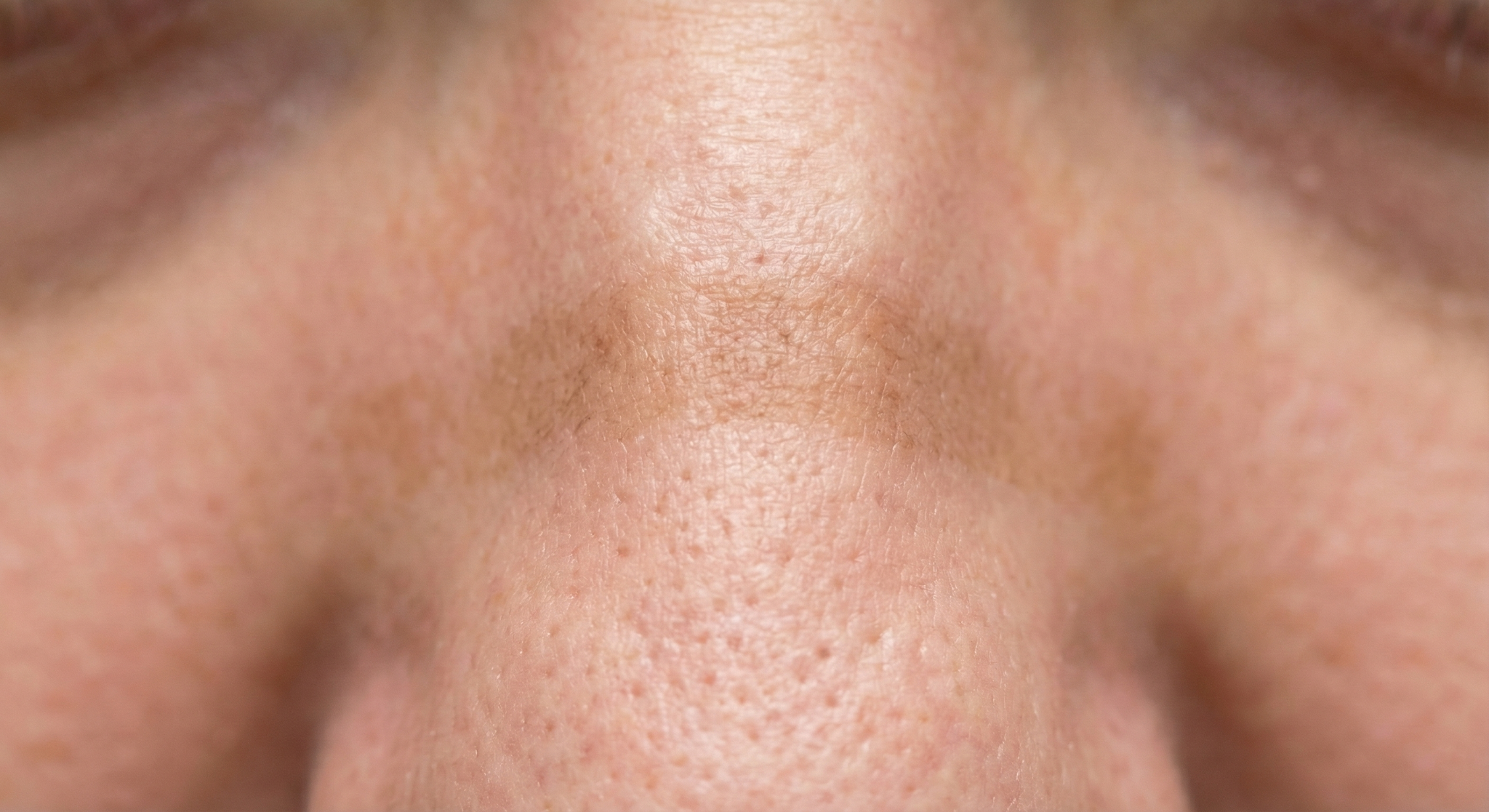
A: Not in the cartilage, but you can get Post-Inflammatory Hyperpigmentation (PIH). This is a darkening of the skin caused by chronic irritation.
-
The Illusion: It looks like a permanent "shadow" or dark dent.
-
The Solution: It’s a pigment issue, not a structural one. Use a Vitamin C serum to brighten the area and always follow the "Pre-Soak" removal protocol.
Q: Does my nose shape (e.g., bulbous or hooked) affect the risk?
A: No. Whether your bridge is high or low, the spring-strength remains the same. Your underlying skeletal structure is far too dense to be moved by a piece of tape.
Q: I have very oily skin; does that make the stretching worse?
A: Actually, it’s the opposite. Natural sebum (oil) acts as a protective lubricant. It prevents the adhesive from bonding too aggressively, reducing the risk of "The Widening Illusion" caused by inflammation.
Q: Is there an alternative that doesn't touch the outside of my nose?
A: Yes. Look for internal nasal dilators. These are medical-grade silicone loops that sit inside your nostrils. They provide the same airflow benefits with zero external pulling. Many in the biohacking community prefer these because they are invisible and reusable.
7. The Final Verdict: Risk vs. Reward
When we look at the trade-off, the benefits of nasal breathing far outweigh the temporary "illusion" of a wider nose.
Chronic mouth breathing is proven to cause actual, permanent changes to facial structure—including a recessed jaw and "long face syndrome." By using nasal strips to ensure you breathe through your nose all night, you are actually protecting your long-term facial aesthetics.
Your nasal strip isn't redesigning your face; it’s a tool for better oxygenation. Wet the strip, be gentle, and remember: your cartilage is resilient—it’s built to snap back. Sleep well, breathe deep, and stop worrying about the mirror.